Ever had a student ask, "Why do we need to learn this?"
It's the question that reminds us why thoughtful learning design matters. You want students as passionate about your subject as you are—truly engaged, thinking deeply, and understanding why the learning matters. When students make these connections, knowledge sticks.
Beyond Concepts: The Power of Open-Ended Challenges
Once you've established your unit's overarching concept (hyper-link to the article), the next step is crafting open-ended challenges. These challenges transform learning from passive reception to active inquiry.
What Makes a Challenge "Open-Ended"?
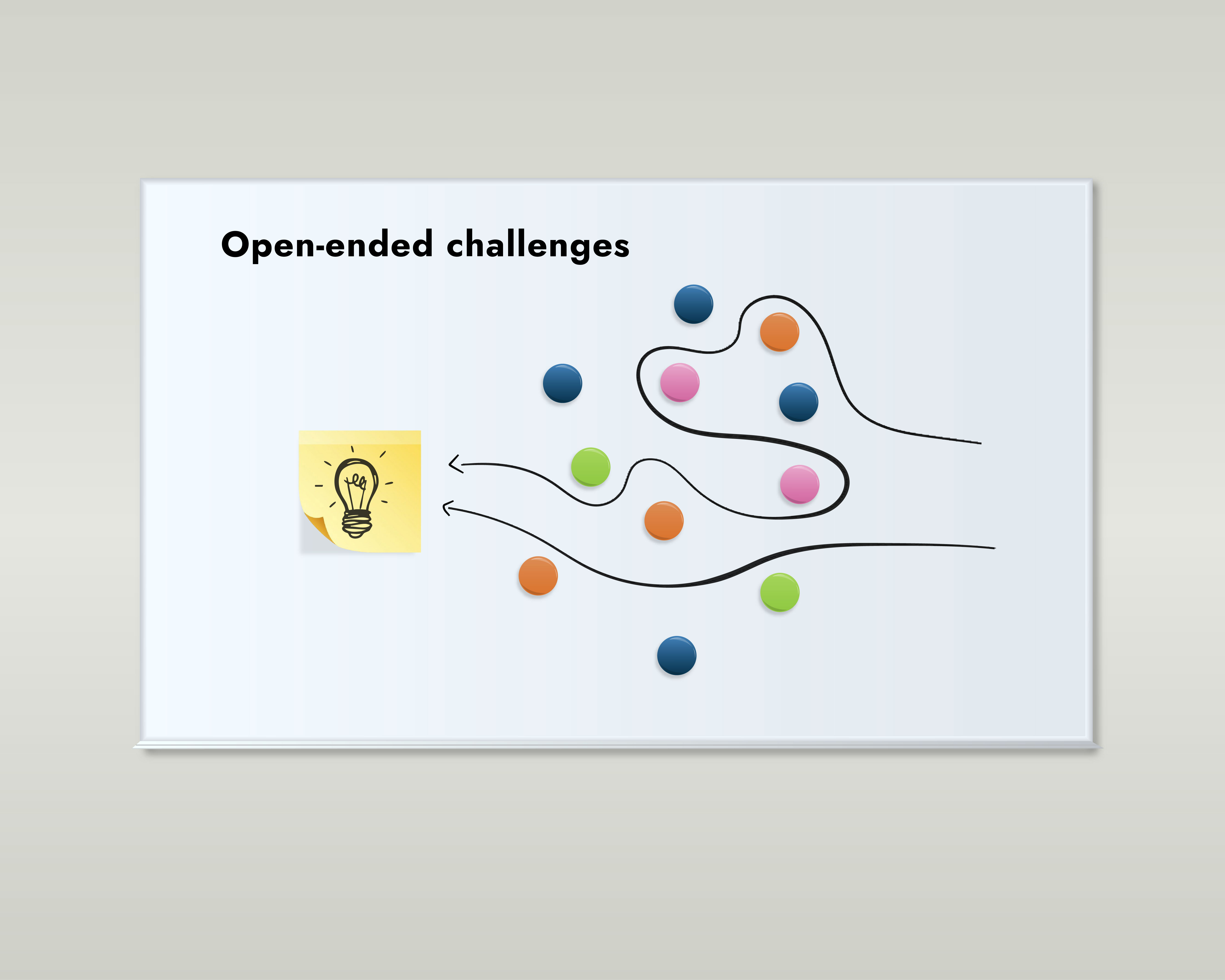
An open-ended challenge is a problem or task without a single predetermined solution. It invites multiple approaches, perspectives, and outcomes. Students must draw on creativity, critical thinking, and innovation to develop their own responses.
Unlike traditional questions with "right answers," open-ended challenges:
- Encourage authentic problem-solving and collaboration
- Promote exploration of diverse ideas and unconventional thinking
- Support knowledge transfer across disciplines
- Develop creative efficacy and learner autonomy
- Help students answer, "What can I do with this knowledge?"
From Challenge to Assessment
The beauty of open-ended challenges? They can become the foundation of your unit's assessment, providing authentic opportunities for students to demonstrate a deep understanding of what you have been teaching.
Examples in Action
For a Year 7 unit exploring the concept of Interconnection an open-ended challenge might be: "In what ways do our water uses and choices shape the communities and environments we live in?"
For a Year 9 History unit focused on Conflict: "In what ways can economic, political, and cultural tensions both unite and divide groups, leading to the outbreak of major conflicts?"
Every Voice Matters
Open-ended challenges create space for every student to engage meaningfully. There's no single "correct" answer, so diverse perspectives are welcomed and valued. This approach builds genuine student agency—students see themselves as knowledge creators, not just knowledge consumers.
Your Planning Partner
The Vivedus Platform makes crafting these challenges easier. Your personal AI assistant, ViV-iT, helps with the brainstorming and heavy lifting, generating thoughtful open-ended challenges aligned to your concept and objectives—so you can focus on facilitating powerful learning experiences.
Read the next resource: Building Student Thinking Skills: How to Embed Creative Dispositions in Whole School Curriculum Planning